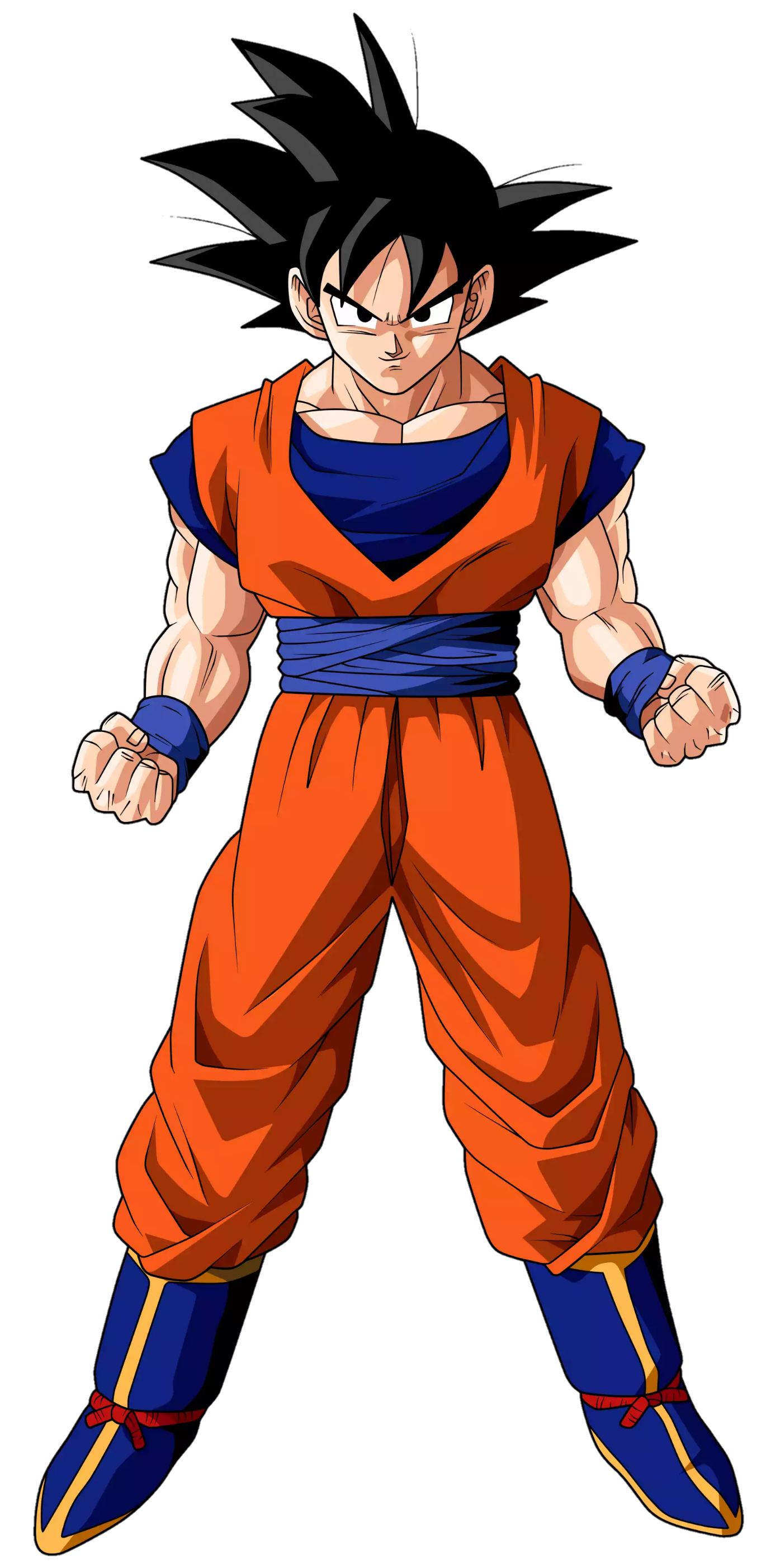
GOKU
Low Class Warrior
Details
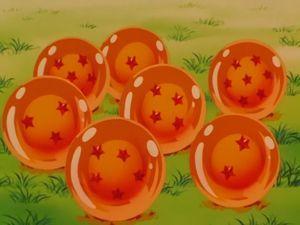
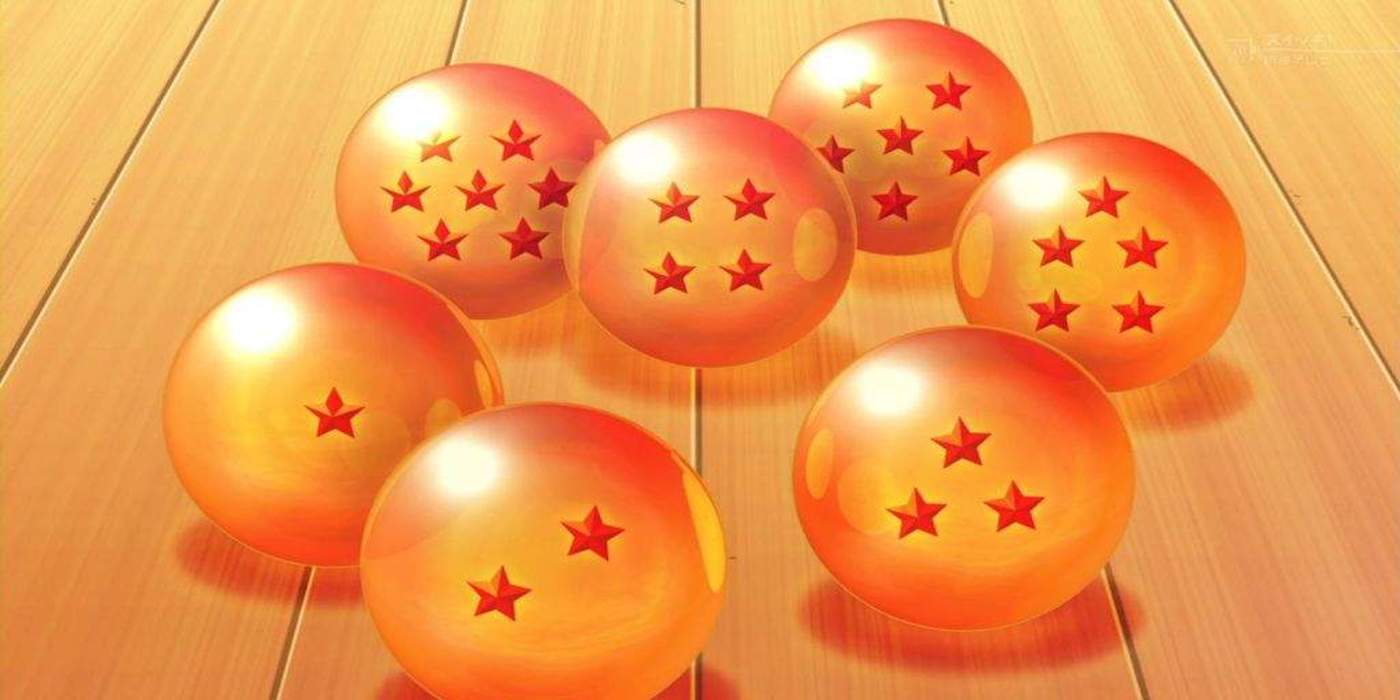
The Earth Dragon Balls were created by the Namekian Kami.These Dragon Balls are small orange balls that can fit in your hand. The dragon that is summoned when you collect all seven balls is called Shenron. Shenron is restricted to only granting one wish at a time and he cannot repeat any wish made before. That fact is basically the whole reason the Z Fighters went to Namek. After the Earth Dragon Balls are used they scatter across the Earth and turn to stone. They remain as stone for an entire year and then become usable. After Dende became the guardian of Earth, he altered the Dragon Balls to make them more powerful. After his alteration Shenron could grant two wishes and if you were done after having only made one wish you can tell Sheron that and the balls will scatter and become usable after only six months.
These Dragon Balls were created by Guru, the leader of Namekian race. These balls are much larger than those of Earth. A normal sized person could only manage to carry two of them at a time. To summon the dragon, Porunga, one must say "Come forth, Porunga" in the Namekian language. Porunga can grant any wish mulitple times and he can grant three wishes per summoning. Although to make a wish you must know how to speak Namekian because that's the only language he understands. As with the Earth Dragon Balls, the Namek Dragon Balls will scatter and turn to stone for a year after use. Unlike Shenron, Parunga can only bring one person back to life per wish.
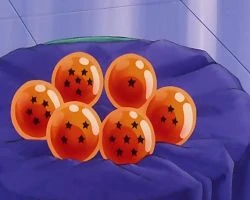
These Dragon Balls were created by Kami before he became guardian of Earth and still had evil in his heart. These Dragon Balls are about the same size as the Earth Dragons Balls and are very distinguishable because instead of having orange stars they have black stars. These balls can grant one wish and are supposedly a lot more powerful than the Earth Dragon Balls, but they are marked by one defect. When you make a wish with these balls then do not turn to stone and the scatter across the universe, not just the Earth. The worst part is that if the balls are not returned to the planet the wish was made on within a year that planet will exploud. These Dragon Balls are strange in the fact that they do not turn to stone even far after the creators death.
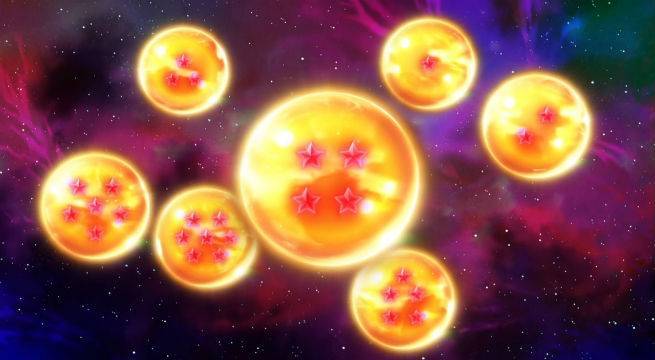
The Super Dragon Balls are the original set of Dragon Balls formed by the Dragon God, Zalama. The Namekians found the Super Dragon Balls and they shaved pieces off to make their own. These Dragon Balls have no limits and can grant any wish the user desires. The size of these balls is the size of planets, and at one point, Champa even calls them "wish planets".Champa had collected six of the Super Dragon Balls and Bulma was on the search for the remaining one, which is revealed to be the Nameless Planet. To summon the Dragon of the Gods, the summoner needs to say in the Divine Language "Come forth Dragon of the Gods and grant my wish pretty peas!" (the last part is changed to "peas and carrots" in the Funimation dub). After a wish is made, they scatter across Universes 6 and 7.
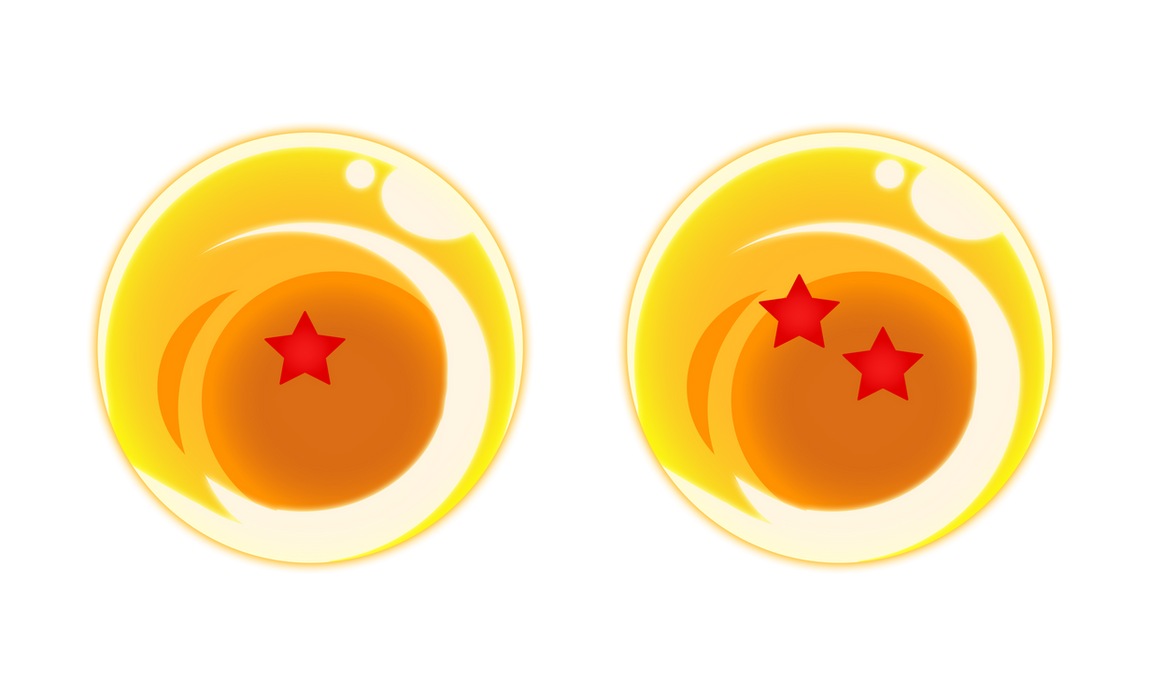
On the planet Cereal, the Namekians who arrived there created Dragon Balls. Unlike the other known Dragon Balls, there exist only two, and are noticeably smaller, being about the size of a ping pong ball. These Dragon Balls are currently tied to Monaito, the last Namekian on Cereal. Monaito had one in his collection, while a young Sugarian had discovered the other by chance, leading scientists to investigate. Granolah suggested that if both were found, he could use his wish to return his fellow Cerealians back to life that was slain by the Saiyan Army, but Monaito counters by suggesting that such a wish would be unfair for the Sugarians who moved in, who themselves were homeless. As shown in the "The Evolution of Planet Cereal" PV this set of Dragon Balls possess black stars on them. Toronbo is the dragon that is summoned from this set.These Dragon Balls do not turn to stone and can be reused again and again as long as they are found again.
Simply titled Dragon Ball, the series' original anime adaptation is arguably the best of the bunch. Not only does the anime adapt its story arcs far better than Dragon Ball Z, but Dragon Ball also doesn't suffer from nearly as much inconsistent animation or awkward filler. Dragon Ball's filler contributions tend to add depth to the main story, expanding on what was already present in the manga.
Interestingly, Dragon Ball's shift into Dragon Ball Z can be traced back to the 23rd Tenkaichi Budokai, when most of the staff that would eventually make up DBZ started working on the series. In terms of pacing, the 23rd Tenkaichi Budokai is much slower than everything that came before, really getting the most out of every single moment. While this style of pacing would later become a massive problem for Dragon Ball Z, it gives DB's last tournament some added gravitas.
In many respects, Dragon Ball Z is just a continuation of Dragon Ball. The first episode aired one week after its predecessor's last, and DBZ's introductory episode was even scripted as a Dragon Ball episode rather than Dragon Ball Z Episode 1. The opportunity to rebrand helped pump lifeblood into the anime's staff, budget, and popularity. For as messy as Dragon Ball Z gets, there's a reason DBZ is overwhelmingly popular.
Beyond the occasionally excellent adaptations of Toriyama's fight choreography (and the outstanding performances from the Japanese cast), Dragon Ball Z opens with Toei's best effort as far as Dragon Ball goes: the Saiyan arc. This is a near- perfect adaptation that reaches movie-quality animation during the fight between Goku and Vegeta. Dragon Ball Z made a statement early on that it was larger than life. Although only covering five major storylines and one filler arc, Dragon Ball Z can be divided into dozens of shorter sagas, and it went on to be the longest-running Dragon Ball anime.
In spite of the series' waning popularity following the end of the manga, Toei went ahead with one last sequel series: Dragon Ball GT. Completely rooted in new material, GT would be an anime-only follow-up to Dragon Ball Z's Buu arc. It's worth noting that while GT is not canon to the main series, it is canon to the original anime's continuity. Toei's original animated canon for Dragon Ball consisted of the first Dragon Ball adaptation, Dragon Ball Z, and finally Dragon Ball GT.
The last episode of DBZ even transitions directly into the first episode of GT with a next episode preview at the end of the former, just like the transition from Dragon Ball into Z. Dragon Ball GT was fairly unpopular at release and remains disliked within the fandom, even if its reputation has improved slightly within recent years. Uninspired, derivative, and generally filled with lackluster fight choreography, Dragon Ball GT was a lousy note to end the series' anime continuity.
Coinciding with Dragon Ball Z's 20th anniversary, Toei decided to recut DBZ to be more in line with Akira Toriyama's original manga. Kai sports re-edited scenes, a lower episode count, a brand-new score by Kenji Yamamoto, and some decent performances from the cast. Some of this is really hit or miss depending on the arc, but Kai makes for a much brisker digestion of Dragon Ball Z.
Fans will miss out on a lot of what made Dragon Ball Z the anime such a great experience, but Kai offers a nice reinterpretation of Z's first three major story arcs, notably making the Frieza arc actually bearable in animated form. The Saiyan arc isn't quite as good, but the rescore arguably suits this portion of the story better, and Kai ending at the Cell arc is a fine resolution.
On the whole, Kai: The Final Chapters is a disappointing follow-up to the original Dragon Ball Kai. While Kai was by no means perfect, including filler that very easily could have been cut at times, it at least had a clear vision and didn’t have a green tint adulterating the entire screen. With Kenji Yamamoto fired, The Final Chapters also suffers from a painfully generic score.
The Final Chapters does not trim enough fat to justify its existence. The animated Buu arc still feels quite bloated, and the Japanese version features worse performances in general. If nothing else, the English dub is actually quite good and follows in Kai's footsteps, so there's plenty of merit in watching both Kai and The Final Chapters in English.
No one could have possibly expected Dragon Ball Super to suddenly end with the Tournament of Power. While there's been more canon animated content in the form of Dragon Ball Super: Broly and Super Hero, the manga has essentially taken over the reins as the main property, covering three whole story arcs since the ToP. Still, Dragon Ball Super is quite an interesting series in its own right. Plagued by scheduling problems, DBS' early run was generally terrible and a disappointment to many fans.
Starting with the Goku Black arc, however, Super brought in a good bit of Dragon Ball Z's tension. By the time the Tournament of Power hit, Dragon Ball Super seemed to be in legitimately good shape production-wise. While the anime suffers narratively, Super manages to ground itself better within the context of the series. Even when Super drops the ball with plot and character development, there's almost always a slice-of-life episode around the corner to remind fans why they love Dragon Ball—the characters.